Osteoporosis drug sequencing puts teriparatide and other bone builders first as practice lags
Specialists say bone building drugs such as the peptide teriparatide work best before an antiresorptive, not after. Trials like DATA Switch back the order, but guidelines differ and payers often require bisphosphonates first.
What's new
Specialists told Healio that bone building drugs, including the peptides teriparatide and abaloparatide, should usually come before antiresorptives, yet most patients still start on a bisphosphonate.
Why it matters
Giving an antiresorptive first can blunt a later anabolic drug, and every osteoporosis drug loses its benefit when stopped, so the order shapes long term bone gains.
What's next
Bone and medical societies have started an effort to harmonize their differing osteoporosis guidelines on which drug should come first.
Osteoporosis drug sequencing, the order in which bone medicines are given, matters as much as the choice of drug for many patients, specialists told Healio Endocrine Today in a report published on 18 November. Their main message is that bone building drugs, including the peptide hormones teriparatide and abaloparatide, work best when they come first and are followed by a drug that slows bone loss. Most patients in real practice still start on a bisphosphonate instead. This explainer sets out the evidence behind the advice and the reasons practice lags.
Two kinds of bone drugs and why order matters
Osteoporosis drugs fall into two broad groups. Antiresorptive drugs slow the cells that break bone down. They include the bisphosphonates alendronate, risedronate and zoledronic acid, as well as the antibody denosumab. Anabolic drugs build new bone. Two of them are peptides: teriparatide, a fragment of human parathyroid hormone, and abaloparatide, sold as Tymlos, which is modeled on a related hormone. The third, romosozumab, sold as Evenity, is an antibody. Benjamin Leder of Harvard Medical School told Healio that all current drugs have modest effects on fracture risk and that most lose effect over time. A patient at high risk who needs long treatment will therefore end up on more than one drug, he said.
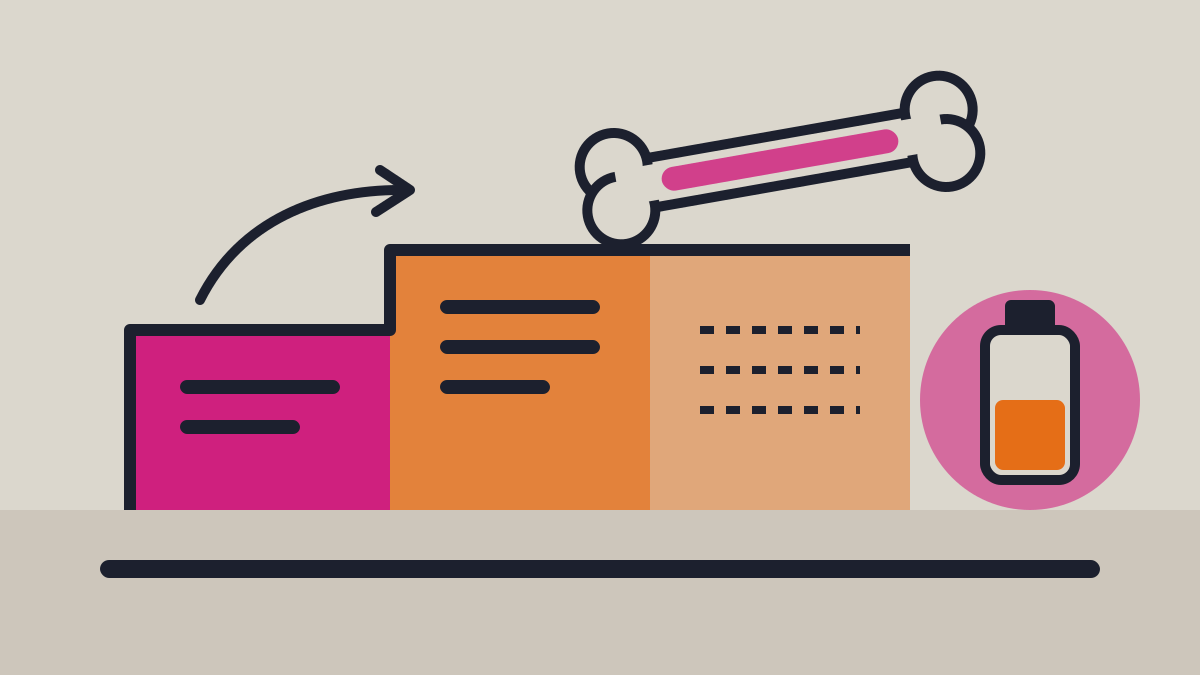
That makes the order a clinical decision in its own right. E. Michael Lewiecki of the University of New Mexico said that giving an antiresorptive first is expected to blunt or delay the effect of a later anabolic drug, especially after long or strong antiresorptive treatment. Starting with the anabolic drug gives the fullest bone building effect, he said, but that gain fades after the drug stops unless an antiresorptive follows. His summary of the rule was that an anabolic drug, if it is ever used, is best started first and must be followed by an antiresorptive. Michael McClung of the Oregon Osteoporosis Center put the problem more simply: "There is no short-term fix for osteoporosis." When any of the drugs stops, he said, its benefit goes away.
What the switching trials found
The clearest data come from DATA Switch, a randomized extension of an earlier trial led by Leder and published in The Lancet in 2015. Postmenopausal women with osteoporosis received two years of teriparatide, denosumab or both, then switched for two more years. After four years, spine bone density rose 18.3% in women who went from teriparatide to denosumab and 14.0% in those who went the other way, though that main difference was not statistically significant. At the hip the gap was clear, 6.6% against 2.8%. The authors reported that moving from denosumab to teriparatide led to progressive or transient bone loss. The DATA Switch results were funded by Amgen, Eli Lilly and the National Institutes of Health.
After four years, spine bone density rose 18.3% in women who went from teriparatide to denosumab and 14.0% in those who went the other way, though that main difference was not statistically significant.
Other work points the same way, Healio reported. A 2026 review of 37 studies in Current Osteoporosis Reports linked sequences that began with an anabolic drug to larger bone density gains than bisphosphonate first step therapy or a single drug. A 2022 study in Osteoporosis International found greater two year density gains when romosozumab came before an antiresorptive than when it followed alendronate or denosumab. A small 2024 study suggested benefit from moving between bone builders, from romosozumab to teriparatide and back. Most of these studies measured bone density, a surrogate marker, rather than fractures. Leder, a DATA Switch coauthor, still told Healio that "the most effective sequence in almost every situation is to start with an anabolic drug."
Why osteoporosis drug sequencing lags in practice
Despite that evidence, most patients first receive a bisphosphonate, McClung said. One reason is that guidance differs. A 2024 position statement written jointly by the Bone Health and Osteoporosis Foundation and the American Society for Bone and Mineral Research moved away from bisphosphonates first for everyone and toward choices based on each patient's risk. Lewiecki, a coauthor, said a hip T score below minus 2.7 or a spine T score below minus 3 makes it unlikely that alendronate alone will reach the target of minus 2.5. The 2023 American College of Physicians guideline, by contrast, still recommends bisphosphonates as first line therapy. Leder said the societies have now started a joint effort to bring their guidance into line.
The table summarizes the main points of disagreement and the barriers the specialists described. Practical hurdles weigh as heavily as the evidence. McClung said primary care doctors know bisphosphonates and find them easy to prescribe, while the alternatives need injection training or infusion center visits. Felicia Cosman of Columbia University said many insurers require a bisphosphonate before they will pay for an anabolic drug. That mirrors the step rules seen in employer GLP 1 coverage and other drug classes. She added that all current bone builders are injected, either daily for teriparatide and abaloparatide or monthly for romosozumab, and some patients refuse injections.
| Issue | What the specialists said |
|---|---|
| ASBMR and BHOF statement, 2024 | Tailor the first drug to fracture risk |
| ACP guideline, 2023 | Bisphosphonates as first line therapy |
| Payer rules | Many require a bisphosphonate before an anabolic drug |
| Delivery | Teriparatide and abaloparatide are daily injections |
| Treatment rates | 15% treated within 90 to 180 days of a fracture in 2009, 8% by 2020 |
Stopping treatment and the wider care gap
The end of a treatment course also needs planning. Cosman said that drugs other than bisphosphonates should not be stopped without a move to another therapy. People coming off long term denosumab need one to two years of a bisphosphonate before they can stop, she said, while after teriparatide, and probably abaloparatide and romosozumab, one or two years is likely enough. Bisphosphonates are different because they stay in bone, which is why a drug holiday after three to five years can be considered. Leder said a holiday makes sense only once a patient is no longer at very high risk, with bone density checks to judge when to restart. Lewiecki added that some patients on bisphosphonates for five years or more stay at high risk and should not stop.
The bigger problem may be that many patients get no treatment at all. A study in the Journal of General Internal Medicine found that 15% of older adults received an osteoporosis drug within 90 to 180 days of a fracture in 2009, falling to 8% by 2020. McClung said fewer than half of people who start a bisphosphonate are still taking it a year later. Without persistence, osteoporosis drug sequencing never comes into play. Cosman called for fracture liaison programs that bring patients with recent fractures straight to specialists. Several of the specialists quoted, including Cosman and Lewiecki, report financial ties to makers of osteoporosis drugs, Healio disclosed. More background pieces are on the Peptide Zone explainers desk.
Conclusion
Osteoporosis drug sequencing has become a central question as more bone drugs reach the market. Trials such as DATA Switch and later reviews suggest that starting with a bone builder, such as the peptide teriparatide, and following it with an antiresorptive gives larger density gains than the reverse. Fracture data are thinner, guidelines still disagree and payers often require bisphosphonates first, so practice has not yet caught up with the specialists' advice.